
The whole programme
Thesis, assembly, structure, operations, and the capital event, carried by one firm across the cycle.
Property Platform
Roll sub-scale operators and assets into one institutional platform.
Sourced, structured, funded, and prepared for the capital that only
buys at scale. By introduction. In confidence.

The platform is the bridge, and in every sector someone builds it.
We set the thesis, assemble the operators and assets, build the structure institutions can underwrite, and prepare the platform for the capital event: institutional investment, a programmatic partner, or a sale at the pricing that scale commands.
The mandate suits operators with a foothold, families with
portfolios worth institutionalising, and principals backing a sector they know.

A proven operator acquires its sub-scale competitors: sites, licences, and
management in one build.
A single asset class assembled deliberately: storage, childcare, medical, logistics, until the portfolio prices as a platform.
Development pipeline and standing assets under one structure, so the value created stays in the vehicle.
The business and its real estate separated into the structure institutions expect, each financeable on its own terms.
Holdings assembled over decades, restructured into a platform the next generation or the market can actually hold.
The programme.
Assembly moves asset by asset; the structure is built
once and receives them all.
The conversation first, under NDA if you prefer. The sector, the foothold, the capital, and whether the platform thesis holds. If it does not, we say so.
The sector mapped: who owns what, what trades at small-lot pricing, and what the assembled platform is worth to institutional capital. Written down before
the first approach.
Operators and assets approached directly and quietly, off-market wherever possible. Retiring owners and tired landlords sell best to a buyer who arrives before the agent does.
The architecture institutions can underwrite: clean titles, sensible entities, the operating and property interests separated where the
exit demands it, with counsel in each jurisdiction.
One reporting line, one asset management standard, one data room being built in real time. The platform premium is earned in the operations, not the announcement.
Institutional investment, a programmatic partner, refinancing at platform pricing, or the sale. Prepared from acquisition one, executed when the scale earns it.
Institutions do not pay for potential; they pay for evidence. Every month of clean reporting is worth more at the capital event than another artist's impression.
The shape of it.
Institutional capital
The platform
The operator
your foothold
Assets 02
off-market
Pipeline 04
develop & hold
Portfolio 01
retiring landlord
Operator 03
vendor rollover
One title register, one reporting line, one platform the institutions can finally buy.
The fragments were never wrong; they were just unbuyable at scale pricing. The platform gives the same bricks a balance sheet, a reporting line, and a buyer universe they never had alone.
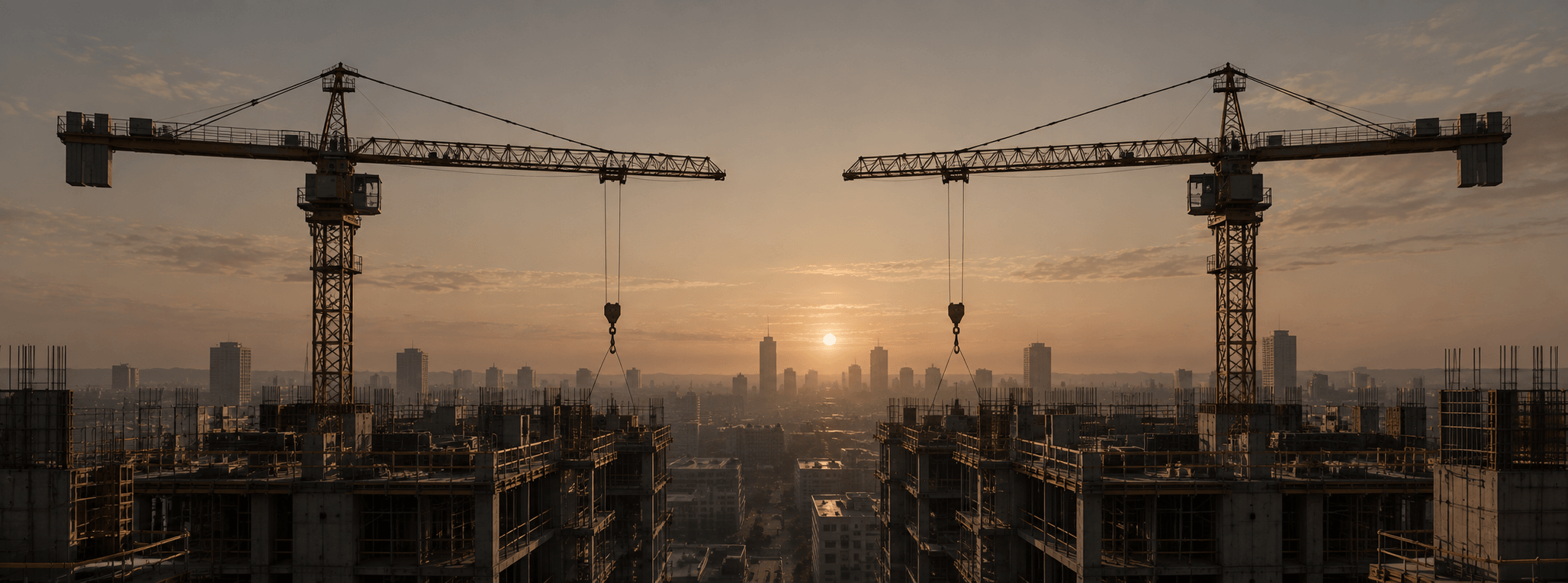
Thesis, assembly, structure, operations, and the capital event, carried by one firm across the cycle.
Retiring landlords and tired owners approached before the agents arrive. Aggregation priced at small-lot
levels is the whole margin.
Entities, titles, and the operating and
property split built for the buyer's diligence, not retrofitted for it.
Acquisition debt, development finance, and equity structured around the pipeline, with the firm's investor network behind it.
Assets in one jurisdiction, capital from three others. The firm's home ground.
Reporting, governance, and the data room maintained from acquisition one, so the
event is a decision, not a project.
The aggregation premium.
An illustration: twelve assets acquired at small-lot pricing, held as
one platform. Every number is an assumption; the thesis phase runs yours.
Twelve assets, separately
One platform
Income
Twelve assets, separately
US$7.2m across twelve owners
One platform
US$7.8m under one management standard
The pricing
Twelve assets, separately
Small-lot yields, retail buyers
One platform
Platform pricing, institutional buyers
Debt
Twelve assets, separately
Twelve facilities, twelve banks
One platform
One facility at platform terms
The buyer universe
Twelve assets, separately
Whoever is local that year
One platform
Institutions, funds, programmatic capital
The value
Twelve assets, separately
What each fragment fetches alone
One platform
The same bricks, repriced by scale
Illustrative and gross of tax, fees, debt, and costs. Yields, management uplift,
and platform pricing are established with real numbers in the thesis
phase, per sector and per market.
The pattern repeats across: self-storage / childcare & education / medical &
allied health / logistics & industrial / hospitality / living sectors
What we act on.
Typically income-producing or near it, typically fragmented ownership, typically with a credible path to the scale institutions require.
Where the firm arranges the funding, that is agreed and
documented as part of the mandate. Terms are set out plainly in the Engagement Agreement before any work begins.
Why do institutions pay more for the same assets?
Because they are buying a platform, not a property: one management standard, one reporting line, one transaction instead
of twelve. Scale removes their cost of assembling it themselves,
and they pay for the removal.
Do we separate the operating business from the property?
Usually, and deliberately. Each becomes financeable and saleable
on its own terms, and the structure phase settles it with counsel against the exit you actually want.
Do we need our own capital?
Some. Vendor terms, rollover, and debt against the assembled income stretch it further than owners expect, and the thesis phase shows exactly how far.
Where do the assets come from?
From the map: retiring landlords, tired operators, and portfolios that never meant to become one. Approached directly, priced fairly, and bought before the agent's board goes up.
How long until the capital event?
Typically three to five years to the scale institutions require, but the platform is kept event-ready throughout, so the timing stays a choice.
What does it cost?
The commercial terms are set out plainly in the Engagement Agreement before any work begins, structured around the programme rather than a single transaction. There are no surprises in our paperwork. You should expect none in your vendors'.

No public references.
Not in marketing, not in conversation, not after the fact. The
builders best placed to vouch for the work are the reason we will
not ask them to. If discretion matters while you assemble, it should
matter to the firm that approaches the owners.
Every mandate begins with a conversation. Outline the sector and the foothold in confidence. If the platform
thesis holds, we will say how we would build it. If it does not, we
will say that too. Request an Introduction, in confidence. No
obligation. An NDA is available before any detail is shared.


